


Laser skin resurfacing
Precise skin renewal. Customized depth. Meaningful collagen remodeling.
When your skin needs more than maintenance
There comes a point when skincare, facials and lighter treatments are no longer enough. Lines feel etched rather than faint. Texture feels uneven in certain lighting. Sun damage is layered. The skin has lost some of its resilience.
Laser skin resurfacing is designed for this stage.
For Dr. Janet Chao Pearl, resurfacing is not a one size fits all treatment. It is a tailored approach to improving damaged, uneven or aging skin using the depth and technology appropriate for your skin quality, skin tone, goals and recovery tolerance. For some patients, this may mean a lighter resurfacing treatment with less downtime. For others, deeper laser resurfacing may be needed to improve more advanced wrinkles, texture change or sun damage.
The goal is to help the skin look healthier, smoother, thicker and more refined.
What laser skin resurfacing can address
Laser skin resurfacing may improve:
Fine lines and deeper wrinkles
Perioral lines (“lip lines”)
Sun damage and uneven pigmentation
Rough or crepey texture
Acne scarring, mild to moderate
Overall skin thickness and firmness
This treatment is particularly effective for areas that are difficult to correct with skincare alone, especially around the mouth and lower eyelids.
Why laser selection matters
Not all resurfacing lasers work the same way. Some treatments are designed for lighter texture improvement and faster recovery. Others work more deeply to address etched lines, significant sun damage and more advanced changes in skin quality.
Dr. Janet Chao Pearl has access to advanced resurfacing technology, including Sciton laser options such as Contour TRL, an erbium-based tunable resurfacing laser designed to allow precise adjustment of treatment depth.
Compared with traditional CO2 resurfacing, erbium-based resurfacing allows for meaningful skin renewal with more precise depth control and, in appropriate patients, a lower risk of prolonged heat-related pigment changes. Final recommendations depend on your skin type, anatomy and treatment goals.
Dr. Janet Chao Pearl’s perspective on skin resurfacing
Skin does not age in isolation. As a fellowship-trained facial plastic surgeon, I evaluate the skin within the full structure of the face: bone, fat, ligaments, muscle and skin thickness.
Overtreating skin when laxity is the true issue leads to disappointment. Under-treating advanced sun damage leads to frustration.
Laser resurfacing is recommended only when it is the correct tool for your anatomy and stage of aging. Restraint is expertise.
What to expect
Laser skin resurfacing is performed in-office.
Depending on treatment depth and area:
Topical anesthesia may be used.
Local anesthesia may be added for comfort.
Larger or deeper treatments may involve sedation or general anesthesia.
The process includes:
A detailed consultation and skin assessment
Discussion of the most appropriate laser option
Clear review of downtime and healing expectations
Pre-treatment skin preparation
Customized laser settings
Close post-procedure follow-up
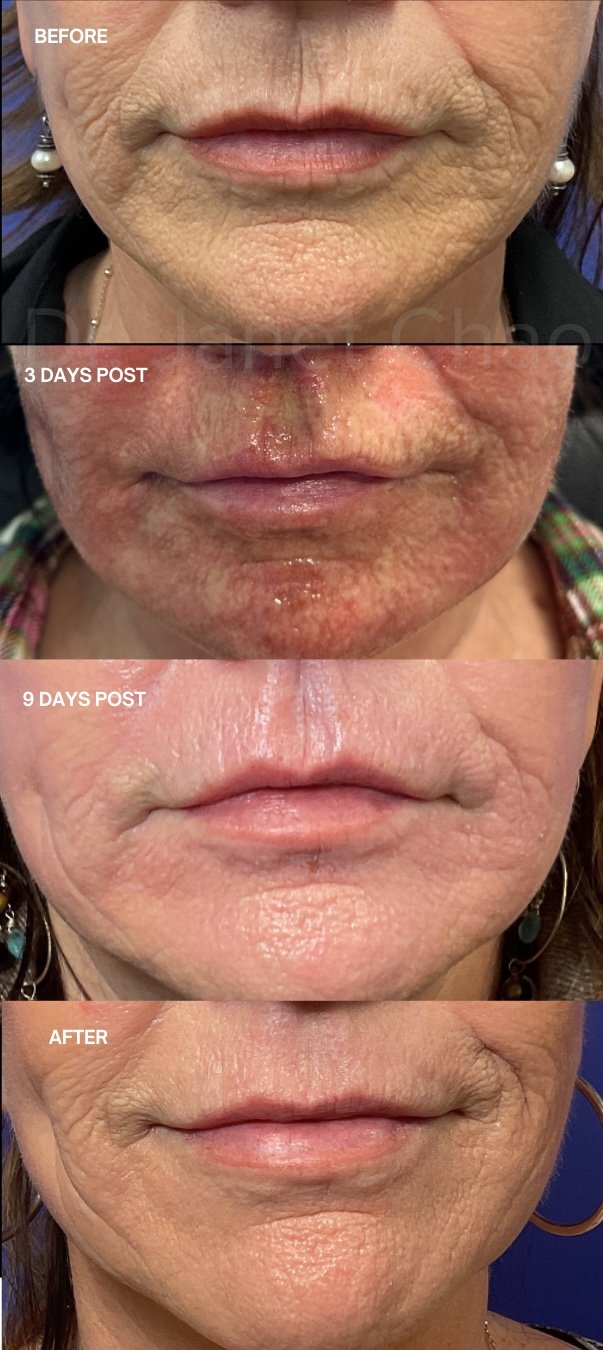
Recovery and healing
Laser resurfacing requires downtime. This is part of why it works.
You can expect:
Redness and swelling in the first several days
Peeling or crusting during early healing
Gradual smoothing as new skin regenerates
Pinkness that fades over time
Continued collagen remodeling for several months
Downtime varies based on the depth of treatment. A lighter resurfacing treatment may involve a shorter recovery, while deeper resurfacing may require more social downtime.
Sun protection becomes essential. Skin continues to improve well beyond the initial healing phase.
I provide detailed aftercare instructions and remain closely involved during recovery.
Practical details
Consultation: Begins through a secure online form followed by in-person evaluation.
Technology: Treatment may include advanced Sciton resurfacing options, including Contour TRL Erbium resurfacing, when appropriate.
Downtime: Varies by treatment depth. Moderate resurfacing often requires visible social downtime; deeper treatments may require longer healing.
Results: Continued improvement over 3–6 months as collagen remodels.
Longevity: Results are long-lasting, especially when paired with good skincare and sun protection.
CO2 laser resurfacing is not maintenance. It is meaningful renewal.